


AIWI / Case Studies / Frances Haugen
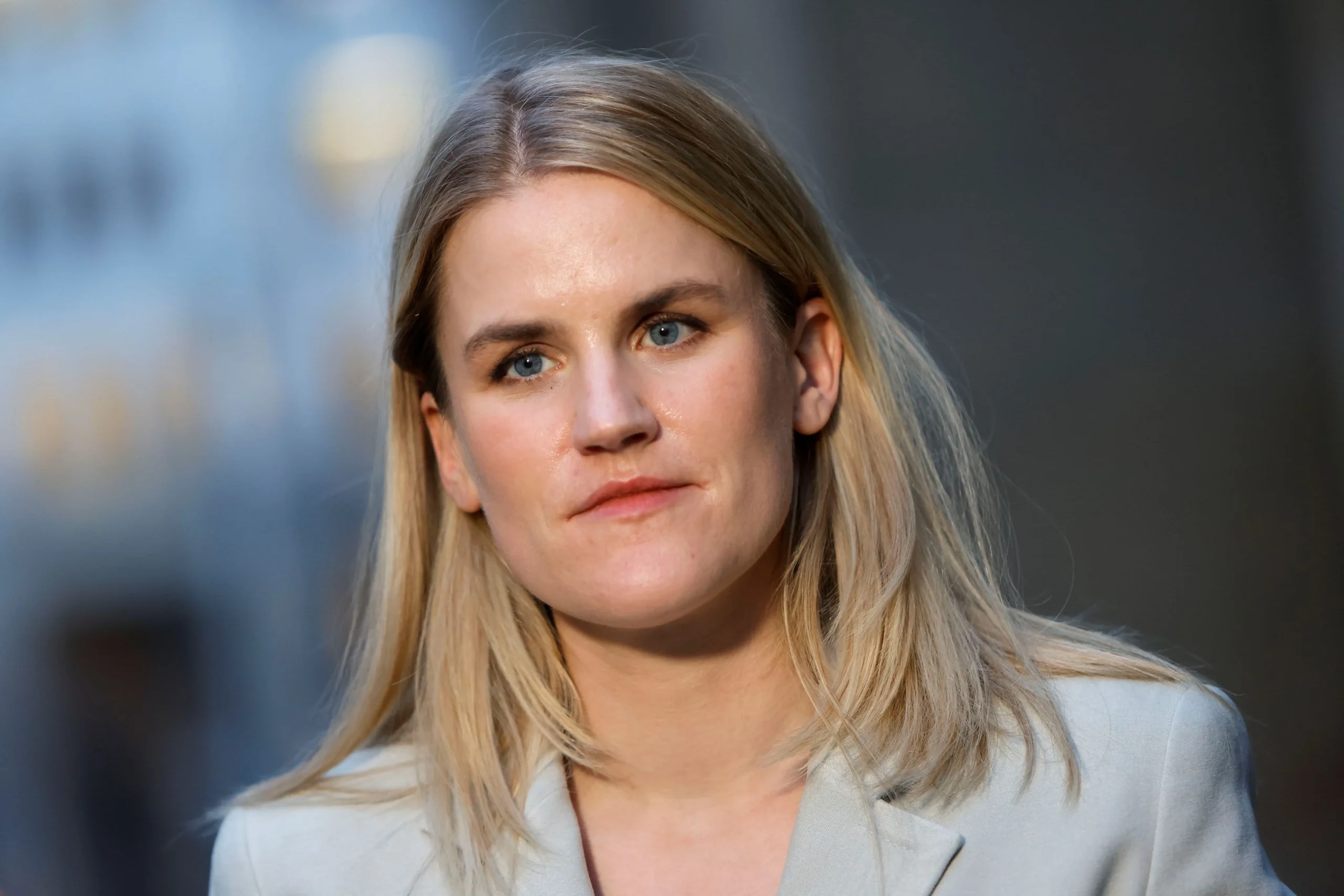
Frances Haugen
Frances was a lead Product Manager at Facebook (now Meta) who resigned and then blew the whistle by disclosing tens of thousands of pages of internal company documents to US Congress, US Securities and Exchange Commission (SEC) and the Wall Street Journal (WSJ). Among the many revelations about the company’s inner workings was the divisive algorithm changes Facebook made in 2018, which she alleged was leading to the prioritization of polarizing or damaging content. She has become an advocate for social media reform, travelling internationally to push for increased legislation and transparency.


Read the Press Coverage:
Company
Facebook (Meta)
Jurisdiction
US
European Union
UK
Year
2021
Issues
Product Safety Risks
Social Media Algorithms Amplifying Harmful Content
Channels
External: Public and Regulatory
Why This Case Matters

Frances continues her advocacy work: she joined the Council for Responsible Social Media; launched her own non-profit organization Beyond the Screen; and is a researcher for two universities in Australia and the US. She also wrote a published memoir about why she blew the whistle on Facebook.

The company faced pushback from regulatory authorities including 8+ whistleblower complaints to the SEC and the FTC tried to reopen its 2020 lawsuit against the company. In the weeks following the disclosures, Facebook published various product, security, and integrity reports describing ongoing enforcement work and policy changes.

Frances’ profile as an advocate for social media reform became clear when she testified before the US Congress, UK and EU Parliaments, the French Senate and National Assembly. Her disclosures and related evidence fed into new regulations such as the EU’s Digital Services Act and the UK’s Online Safety Act.
Support Received
- Legal Support Whistleblower Aid
You don’t need to be in a crisis to seek help. Pro bono legal counsel can help you navigate your situation and find the right support.
Explore Your Legal Options →
Timeline
Outcomes
For the Whistleblower
Frances’ whistleblowing was the catalyst to her advocacy for social media reform. She was lauded as a “21st-century American hero” by Democrat Senator Ed Markey when testifying to the US senate. By describing her as such referenced the personal risk she took in coming forward; there was widespread media discussion on whether Facebook would sue Frances.
A Facebook spokesperson used the word ‘stolen’ to describe the confidential company documentation Frances had shared with press, as well as redacted versions shared with the US Senate. Legal experts and prior whistleblowers noted she wouldn’t be the first individual sued for a breach in contract or non-disclosure agreement. However, some reasoned it would not be in the company’s favour to do so in light of the backlash Facebook already faced from the public and governmental authorities [24], [25].
Ultimately, Facebook did not take any legal action against Frances. However, significant efforts were made to counter the potential threat of one. Once she revealed her identity as the ‘Facebook whistleblower’ in October 2021, Whistleblower Aid – the nonprofit that was supporting her – launched a GoFundMe page for her, noting Facebook had “limitless resources and an army of lawyers” [26]. Initially, the goal was to raise $10,000. Within 30 minutes, they had already received $1,195 from 18 donors; thereafter the fundraising goal was increased to $50,000.
Her profile as an advocate became clear when she testified before the US Congress, UK and EU Parliaments, the French Senate and National Assembly. It was also amplified by her engagement with lawmakers internationally on how to reform social media platforms to “[bring] out the best in humanity” [27].
In 2022, Frances joined the Council for Responsible Social Media, a new coalition created to “press big tech to change” [28]; launched her own non-profit organization Beyond the Screen; and was presented with an honorary America-Norway Heritage Award from the Norway-America Association for her work as a whistleblower. That same year, she was also a guest of President Biden’s at the State of the Union address. Biden applauded her courage as he called for new measures to limit children’s interaction with social media platforms [29]. In 2023, her memoir, The Power of One: How I Found the Strength to Tell the Truth and Why I Blew the Whistle on Facebook, was published by Little, Brown and Company.
Frances has continued her advocacy work, giving interviews and publicly speaking out about safety improvements that could be made to Meta (formerly Facebook), as well as the need for increased online safety policies and data transparency [30]. She also conducts research at Australian National University’s Tech Policy Design Center and McGill University’s Center for Media, Technology and Democracy [31].
Read More →
Consequences faced:
Note:
This is AIWI’s interpretation of the consequences faced by the individual based on publicly available information, as stated in our methodology.
For the Case
The case’s widespread media coverage added to the regulatory pressure the company – and other social media platforms – faced in the weeks and months that followed Frances’ whistleblowing. Frances’ attorneys filed at least eight whistleblower complaints to the SEC; five Senate hearings with social media executives were demanded (as well as calls for Facebook to preserve documents and data related to Frances’ testimony); and the Federal Trade Commission also tried to reopen its 2020 lawsuit against the company, which sought to ban Meta from monetizing children’s data [32], [33]. Since Frances’ disclosure, over 40 state attorney generals, hundreds of school districts and dozens of individuals have sued Meta and other social media companies for a lack of safety features for children [34].
In the weeks following the disclosures, Facebook published various product, security, and integrity reports (e.g. coordinated inauthentic behavior reports, adversarial threat reports, changes to news feed etc.) describing ongoing enforcement work and policy changes. These were positioned as part of the company’s official response to safety/abuse concerns. Though leading to more transparency on internal company policies and changes, it is not clear how far these addressed any of the central allegations made by Frances.
The revelations caused reputational damage to Facebook, which was viewed by some as a contributing factor to the company’s rebranding to ‘Meta’ [35], [36], [37]. In fact, a top company executive had answered in a company-wide Q&A session that the rebranding success was measurable in that it outweighed the coverage made about the ‘Facebook Files’ i.e. the internal company documents revealed by Frances [38].
In terms of product and system changes, Meta (formerly Facebook) paused development of a version of Instagram aimed at younger users after the WSJ reports and Frances’ testimony that Instagram was harmful to teenagers’ mental health [39]. It was also reported that the company was delaying the rollout of new products and pausing some work on new and existing products for similar reasons.
In terms of regulation, Frances’ whistleblowing incited several actions. It spurred debate on reforming section 230 of the US Communications Decency Act which exempts social media companies from liability for content posted on their platforms [40]. Her disclosures and related evidence fed into new regulations such as the EU’s Digital Services Act and the UK’s Online Safety Act. The former is a landmark EU regulation imposing obligations on large online platforms related to content moderation, risk assessments, and algorithmic transparency; the latter holds social media companies more accountable to protecting users from harmful content under threat of fines if they fail to do so.
In 2022, Frances stated that despite the congressional hearings and investigations, Meta had made few meaningful changes to its policies, and more still needs to be done to hold such companies responsible. US legislation that Frances had been publicly supportive of, such as the Platform Accountability and Transparency Act, and Kids Online Safety Act (KOSA), have yet to be passed into law. However, there has been momentum on tackling concerns raised by individuals like Frances. In January 2026, there is set to be a landmark trial in the US, alleging that several social media companies, including Meta, have deliberately covered up the harms their platforms cause.
Read More →
Your concerns matter and deserve expert answer
If you see something concerning, it’s already worth a confidential conversation. AIWI can help you find clarity with the support of our expert network. Confidential, anonymous and on your terms.


